What Does “Open Format DJ” Mean, and Is It Right for Your Party?
An open format DJ plays across genres and decades in one set, choosing each record by what the room needs. Here's what that means in practice, how it differs from a genre specialist, and how to check a DJ really does it well.
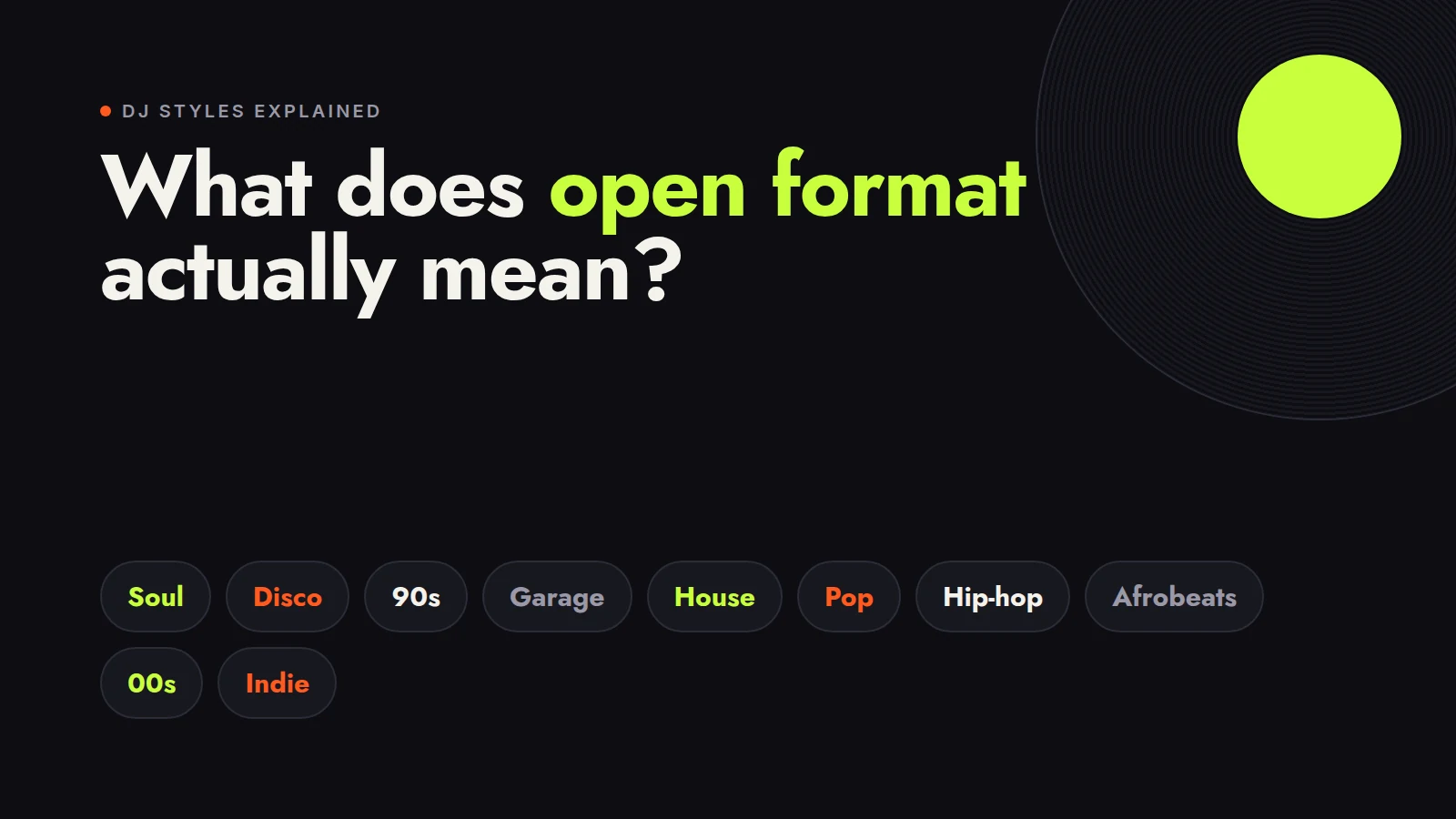
An open format DJ plays across genres and decades in one set instead of sticking to a single style. In one night they might go from soul to 90s pop, into garage, house and a current chart edit, choosing each record by what the room needs rather than by which genre it belongs to.
If you're booking a DJ for a wedding, a big birthday or a work do, it's probably the style you need. But "open format" is also one of the most used and least checked phrases on DJ profiles, so it's worth knowing what it really means, and how to tell whether a DJ actually does it well.
What is an open format DJ?
Most DJs build their identity around a sound. A techno DJ plays techno, a drum and bass DJ plays drum and bass, and their crowd turns up for exactly that. An open format DJ (sometimes called a multi-genre DJ) is defined by the room instead. Their job is to keep a mixed crowd dancing, and they'll use whatever genre gets them there.
Plenty of the DJs people hire for private events, often called mobile DJs, work this way. So do a lot of bar and club DJs whose crowds change from hour to hour.
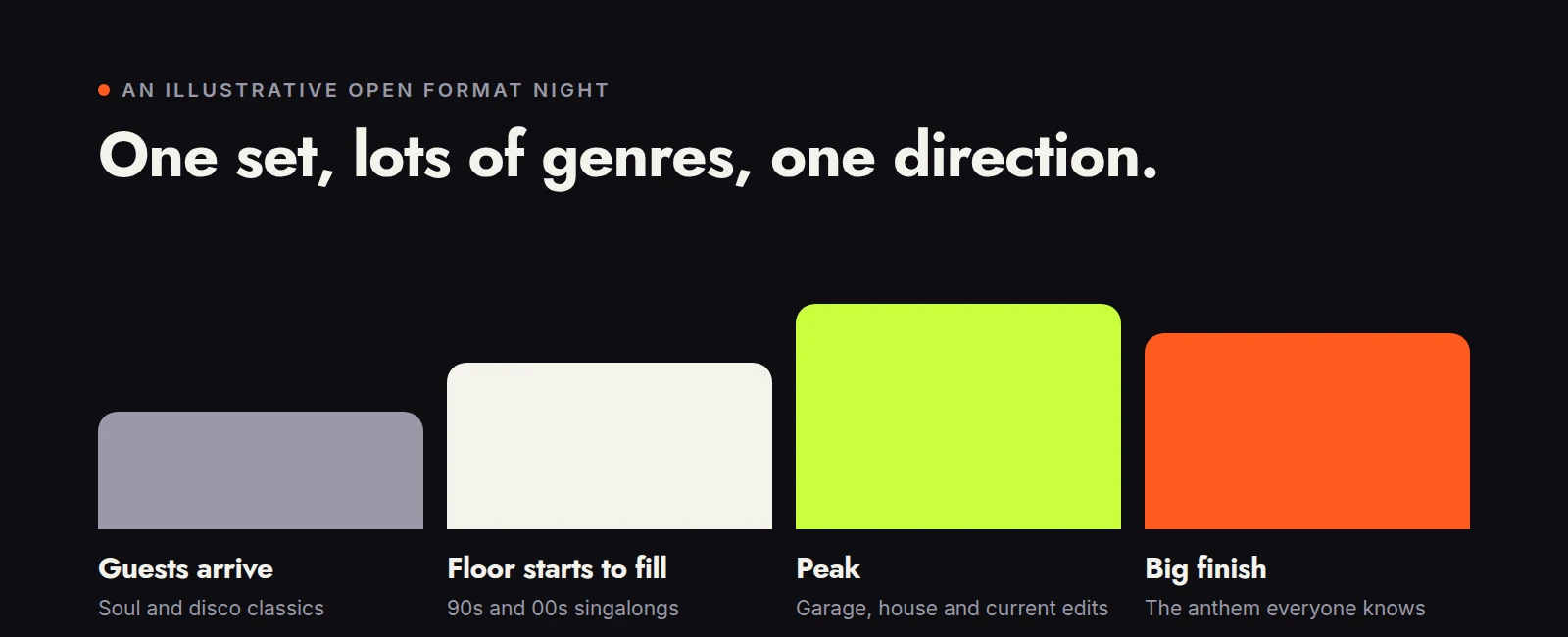
Good open format isn't a shuffled playlist. It still has a shape. The energy builds, peaks and lands, the same way a great club set does. The difference is the route. Where a specialist builds tension inside one sound, an open format DJ builds it across several.
Why it's harder than it sounds
Moving between genres is a skill in its own right. Records in the same genre usually sit at similar tempos with similar drums, so they blend easily. Jump from a 90s hip-hop track to a house record and the tempo, the groove and the feel all change at once. DJs use techniques like beatmatching to line up tempos, but crossing styles smoothly also takes a big library, quick instincts and a very good read on the people in front of them.
That's why two DJs who both describe themselves as open format can sound completely different. One makes every change feel natural. The other lurches from song to song and loses the floor every time the style changes.
Open format vs a genre specialist
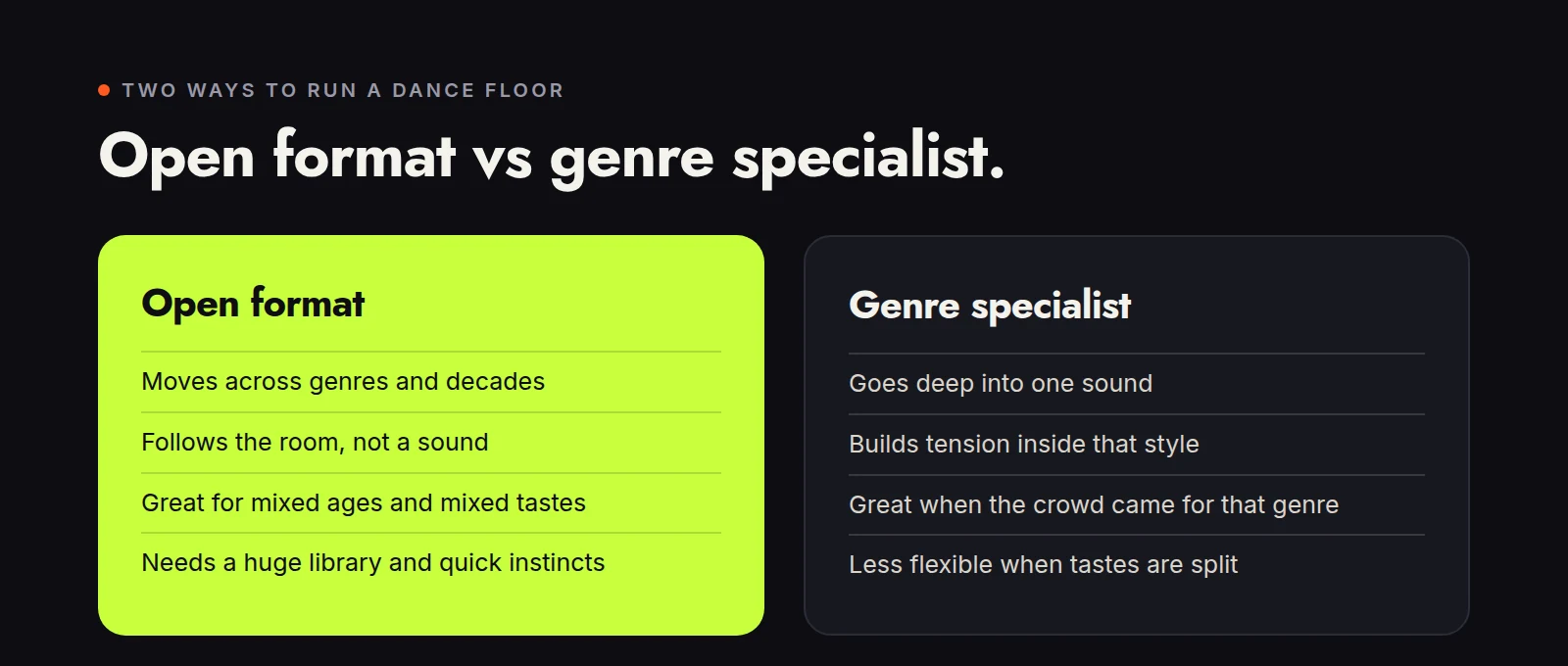
Neither is better. They're built for different jobs. A specialist is perfect when everyone came for the same music, like a themed night or a club with a strong identity. An open format DJ is built for the opposite: a room where tastes are split and the aim is to get as many people dancing as possible. It's the style most party DJs work in too, even the ones who never use the phrase.
This is the same distinction we explored in wedding DJ vs club DJ. A brilliant specialist can struggle at a wedding, not because they lack talent, but because the brief is completely different.
Is an open format DJ right for your party?
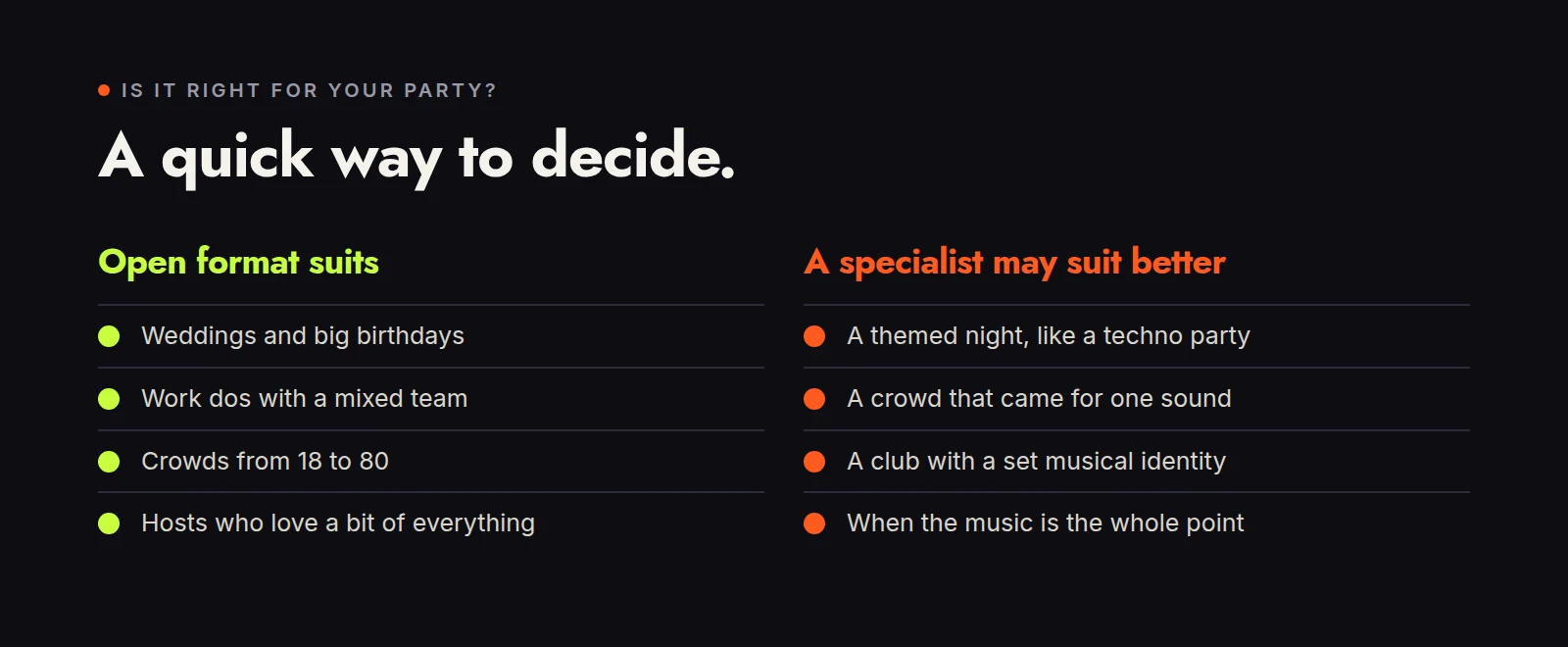
For most private events, the answer is yes. If your guests span more than one generation or more than one playlist, breadth beats depth. Weddings, milestone birthdays, anniversaries and office parties tend to bring together people of different ages and tastes. An open format DJ can play to the grandparents early on, the uni friends later and still find the record that gets both on the floor together.
A specialist may suit you better if the music is the whole point. A drum and bass birthday, a house music night for friends who all love house, or a party with a strict theme will usually feel more focused with someone who lives in that sound.
How to tell if a DJ really is open format
The label costs nothing to add to a profile, and a party DJ who can only play one genre is a party DJ who can only take one kind of booking. So check it properly:
- Listen to a mix that moves. Look for one that changes genre at least a few times. Pay attention to the changes, not just the songs. Do they feel smooth, or like someone changed the radio station?
- Check the range of their mixes. A DJ with one party mix and ten techno sets may be a specialist with a commercial side, rather than a true all-rounder.
- Ask how they handle a split room. A good open format DJ will have a clear answer about reading the crowd, not just a list of genres they can play.
- Tell them about your crowd. The more they know about who is coming, the better they can plan the route through the night.
Listening matters more than anything a profile says, which is why we think a DJ's mix tells you more than any testimonial. And if you're comparing prices, our guide to how much a DJ costs in the UK shows what to expect for a typical party or wedding.
Find an open format DJ
On DeckGigs you can filter for DJs who list open format as one of their genres, then press play on their mixes before you get in touch. Every profile also shows a starting rate and the dates the DJ has marked as free.
Browse open format DJs on DeckGigs and hear before you hire, so you know they can take your crowd on the journey, not just play the hits.
Quick answers
What does open format mean for a DJ?
An open format DJ plays across genres and decades in a single set instead of sticking to one style. They choose each record by what the room needs, so a night might move from soul to 90s pop, garage and house.
Is an open format DJ good for a wedding?
Usually, yes. Weddings bring together guests of different ages and tastes, and an open format DJ is built to keep a mixed crowd dancing. Listen to one of their mixes first to check the genre changes feel smooth.
What is the difference between an open format DJ and a genre DJ?
A genre DJ goes deep into one sound for a crowd that came for it. An open format DJ moves between styles to suit a mixed room. Neither is better; they suit different events.