Things Said to DJs That Should Require a Licence
A few sentences get said to DJs every weekend. They sound polite. They are not helpful. Here is what each one actually means, and what to say instead.
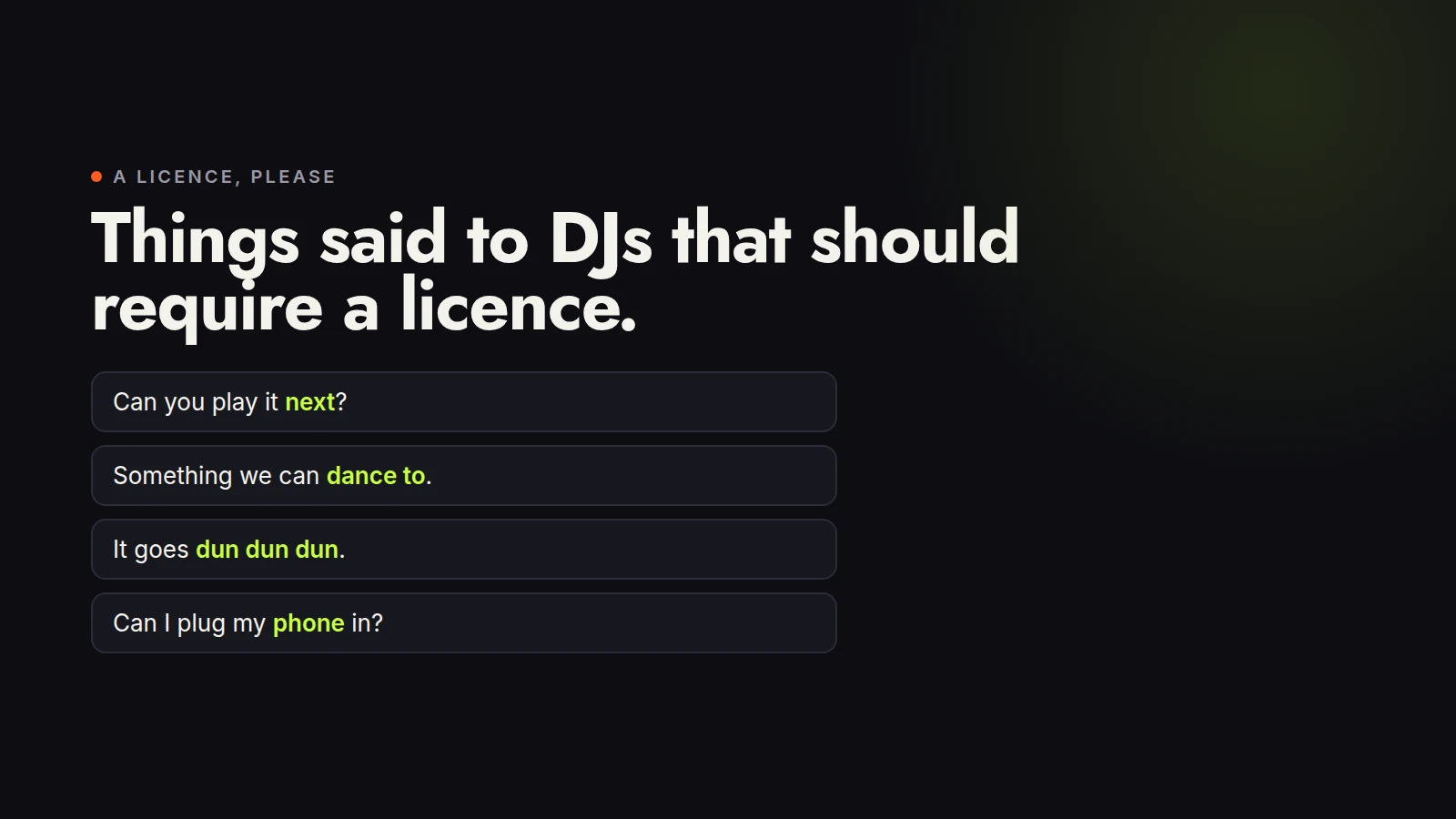
A handful of sentences get said to DJs every weekend. They sound polite. They are not helpful. A DJ can work with a specific request. They cannot work with a riddle, a shrug, or a phone that is about to ring.
None of these lines are rare. If you have booked a DJ, or you are about to, you have probably said one of them, or heard a guest say it. The fix is small. Say what you mean before the night, and leave the booth alone while the set is doing its job.
This is not a music licence
First, the boring bit, so nobody writes in. In the UK, PRS for Music licenses music usage and collects royalties for its members. Venues and events deal with that separately. This post is not that. This is the imaginary licence for things people say at the decks, the ones that should at least come with a form.
A DJ plays recorded music for a room. The skill is choosing what, and when. The sentences below all skip that and ask the DJ to guess.
Can you play it next?
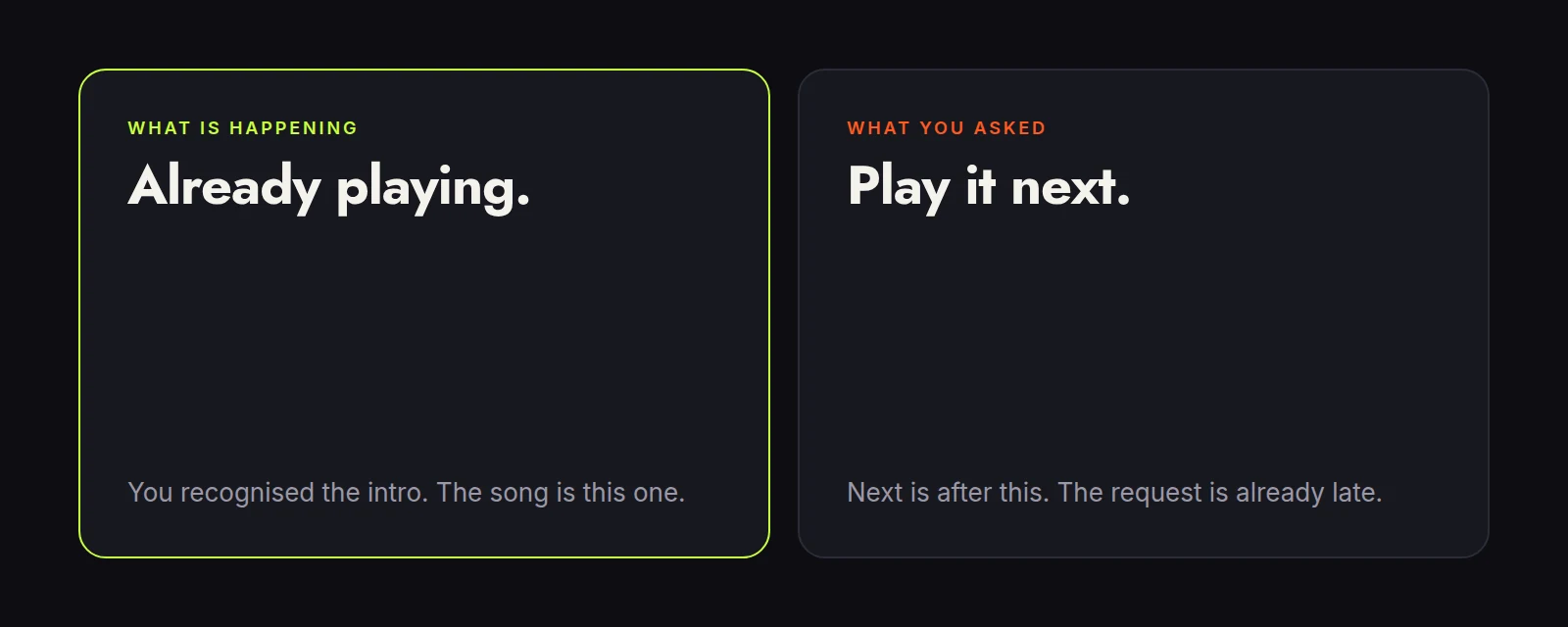
It is already playing.
This one usually arrives in the middle of the song. The guest has just recognised the intro, walked over, and asked for the track that is coming out of the speakers. Next, in their head, means now. Next, to a DJ, means after this one, which is when the room has moved on and the request is already late.
If you want a song, ask for it before it starts, or enjoy the fact that it started without you. Pointing at the booth during the drop does not move it earlier. It is already the current song.
Can you play something we can dance to?
Look at the floor. If people are dancing, the brief has been met. If they are not, "something we can dance to" still does not say what. A wedding, a work party and a club night can all be full of people who dance, and they will not dance to the same thing.
That gap is the whole of wedding DJ versus club DJ. A set that works for people who bought a ticket for one style can leave a mixed room standing at the bar. The guest who asks for "something we can dance to" often means "something my table knows". Say that. Name the table. Name two songs. The DJ can do a lot with two songs and almost nothing with a mood.
The same request turns up at work parties, usually from the person who also said they wanted it classy. Classy and danceable can live in the same night. They cannot live in one vague sentence shouted over the chorus.
I don't know the name. It goes dun dun dun.
That narrows it down to music.
A kick drum is not a title. Most of what a dance floor plays has a pulse, and humming it at the booth gives the DJ a rhythm they already have in the headphones. There is a proper way to hand over a half remembered song, and it does not involve sound effects. We wrote that up on its own: how to request a song when you do not know the name.
Can I plug my phone in? I've got a banger.
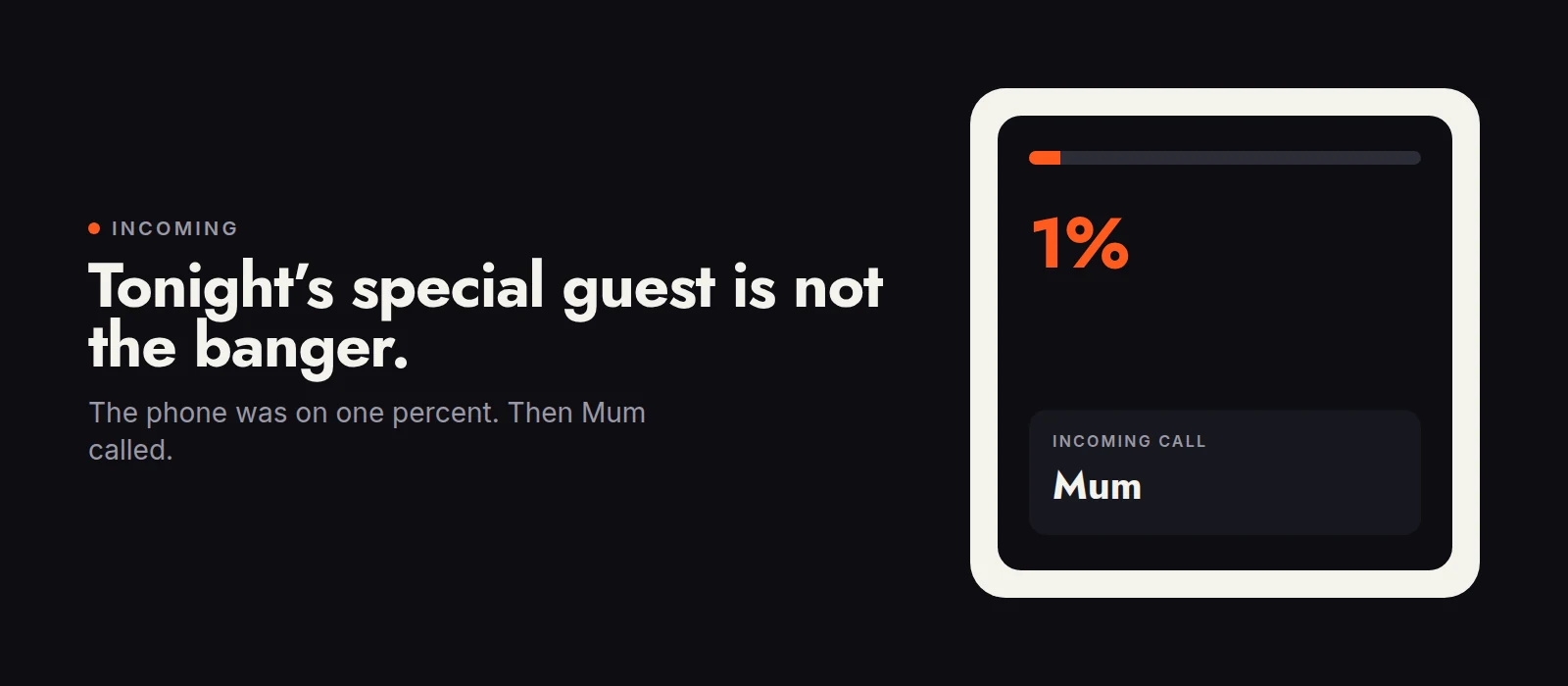
The phone is on 1%. Then Mum calls.
This is the request that feels generous. The guest has a song, they have it on them, and they would like the aux cable, please. What they are actually asking is for the person you booked to stop being the DJ for three minutes, or until the battery dies, or until an incoming call takes the Bluetooth over. Tonight's special guest is not the banger. It is whoever rings.
If a moment really does need a file from a phone, sort it before the night. Send the track. Agree where it sits. Do not invent a new plan at 10pm with a lead that nobody has tested. The person you hired is there to play. A surprise cable is how that plan quietly ends.
My mate's a DJ
A mate with a laptop is a favour. A favour is lovely for a kitchen. It is a thin plan for a wedding, a milestone birthday or a work party where people have travelled, hired a room and expect the evening to run.
The mate might be brilliant. Plenty of working DJs started as somebody's mate. The question is whether this night is the one where they find out if the kit, the timing and the room are all fine. If the answer is "we'll see", you are not booking a DJ. You are hoping.
Hoping is also how people get ghosted, double booked, or introduced to a different person on the day. Those are the boring failures, and they are the ones worth checking before you pay a deposit. A mate does not skip that list because you like them.
What to say instead
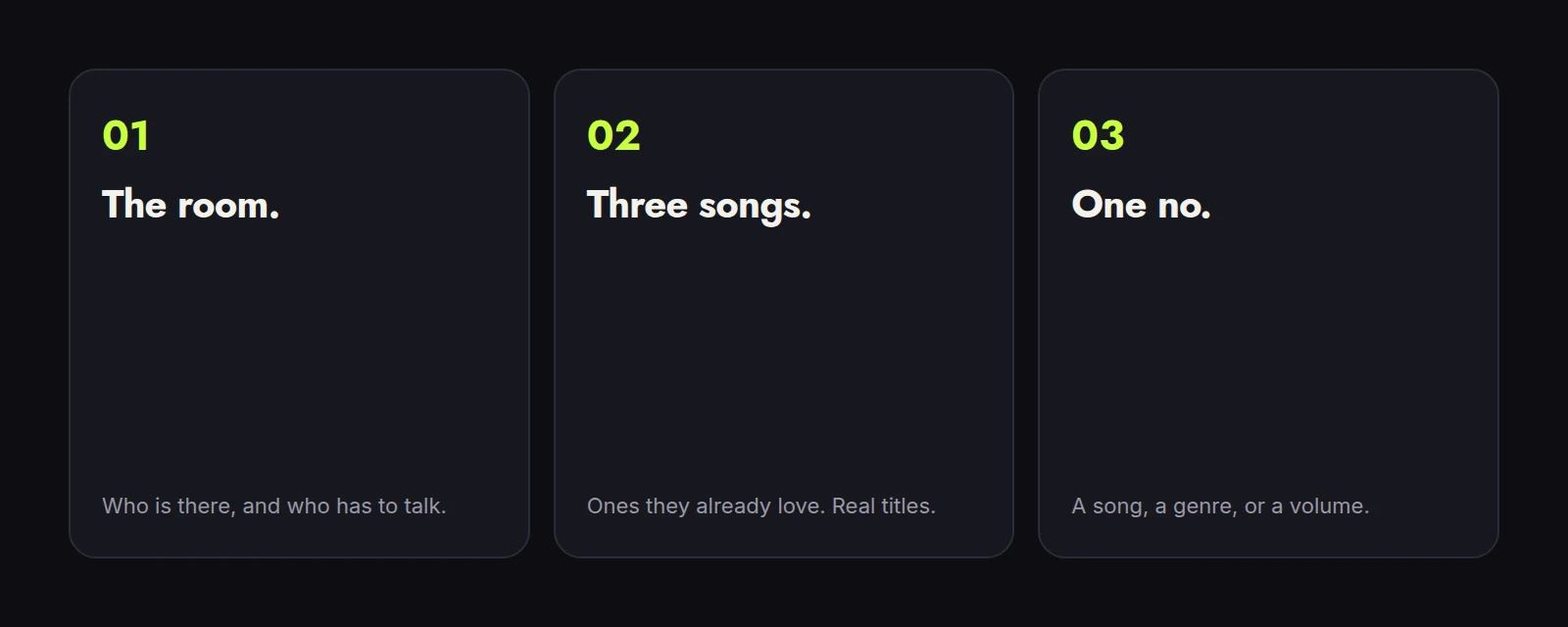
You do not need a speech. You need three things, sent before the night, in writing:
- The room. Who is there, roughly what ages, and whether anyone has to talk over the music for part of the evening.
- Three songs they already love. Real titles, or links. Not "a bit of everything".
- One thing you do not want. A genre, a song, a volume. DJs are good at avoiding a clear no. They are bad at guessing a secret one.
Then listen. A paragraph of taste is still a claim until you hear a mix from a night like yours. That is the useful half of booking, and it is why a mix tells you more than a testimonial. DeckGigs is built around that: hear before you hire. Profiles show a starting rate and approved mixes you can play before you enquire. Free dates and how many hours the rate covers are optional, so read the profile in front of you rather than assuming every one lists them.
If you are booking a party and you want to start with people who already say they play that kind of night, browse private party DJs and press play. The licence for vague requests is not available. A clear brief is: weddings should start with our one page DJ brief.
Quick answers
What should I say to a DJ instead of play something we can dance to?
Say who is in the room, name two or three songs they already love, and name one you do not want. That is a brief. Play something we can dance to is not.
Can I plug my phone into the DJ's system?
Ask before the night, not at the booth with a dying battery. A booked DJ is there to play a set. A surprise aux cord usually means the plan you paid for stops.
Is this the same as a music licence?
No. In the UK, PRS for Music licenses the use of music. This is about the sentences people say to a working DJ, which are a separate problem.